The E Ink Benefit for Memory Related Conditions. E-Ink vs LCD Tablet Screens: E-Ink Technology for Better Reading Process
E Ink Benefits for Memory-Related Conditions
In an age dominated by glowing screens and constant notifications, E Ink technology is emerging as an unexpected help — especially for individuals living with memory-related conditions such as dementia or Alzheimer’s. Its calm, paper-like display offers more than a comfortable reading experience: it can also support focus, ease stress, and create a gentler environment for everyday tasks.
This article looks at how E Ink screens differ from standard LCD tablets, why that difference matters for cognitive comfort, and the practical ways caregivers and families can put these devices to use.
What Is E Ink and Why It Matters
E Ink, short for “Electronic Ink,” mimics the appearance of real paper. Unlike traditional screens that emit harsh light, E Ink reflects ambient light, making it gentle on the eyes and well suited to extended reading or note-taking. Devices like BOOX tablets use this technology to deliver a natural, distraction-free digital experience.
For people with memory impairments, that simplicity and clarity can make a meaningful difference. A screen that looks and behaves like paper feels familiar rather than overwhelming, which can lower the barrier to using technology at all.
How E Ink May Support Memory and Focus
E Ink is not a treatment, but its design removes many of the things that make ordinary screens tiring and distracting. Those qualities can indirectly support attention and comfort in the following ways.
Reduced Cognitive Overload
Standard screens bombard the brain with bright colours, pop-ups, and blue light. E Ink displays minimise these distractions, helping users stay focused on a single task at a time — which can be especially valuable for someone managing memory challenges.
A Calmer Visual Experience
E Ink’s soft contrast creates a low-stress reading environment, which may help with comprehension and recall. With less visual strain to contend with, more attention can go toward processing and remembering what’s on the page.
Easy, Hands-On Note-Taking
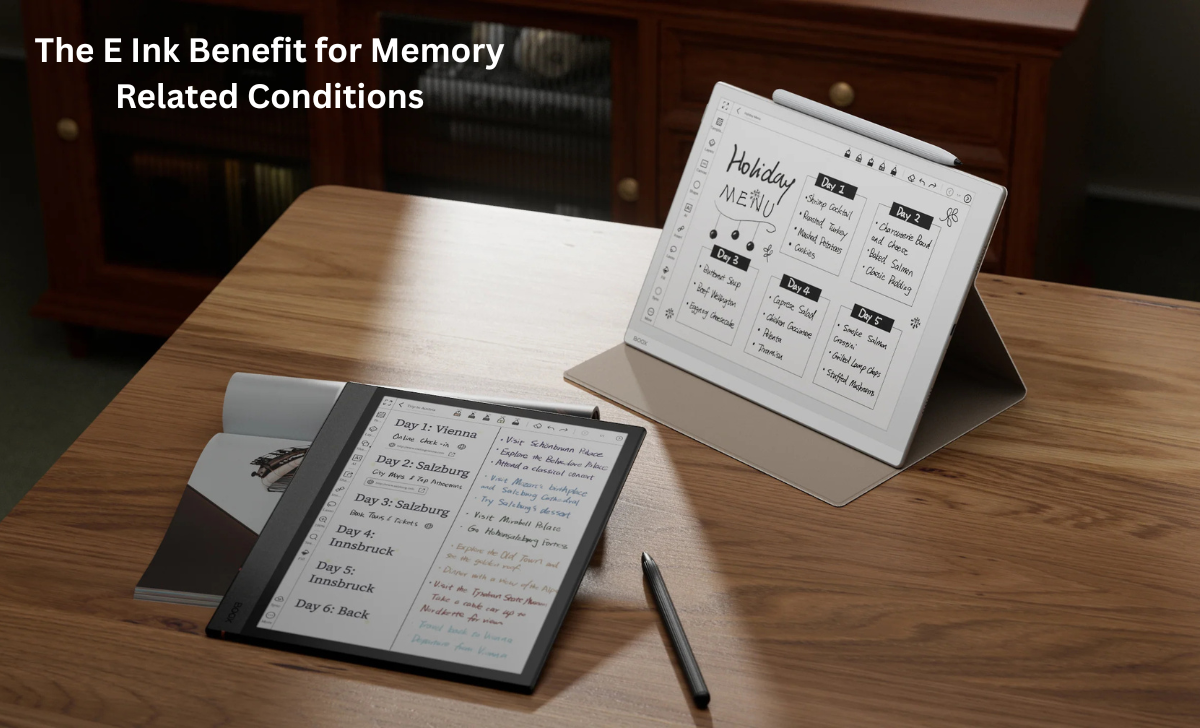
Many E Ink tablets let users write, highlight, or annotate directly on the screen. This kind of active, hands-on engagement can reinforce learning and is ideal for daily reminders, simple journalling, or keeping track of routines.
Real-Life Applications for Caregivers and Families
E Ink devices can act as practical memory companions around the home. Caregivers can use them to display:
- Daily schedules and medication reminders, kept clear and easy to read.
- Family photos labelled with names, to gently support recognition.
- Positive, reassuring notes that help reduce anxiety and confusion.
Because these screens are energy-efficient and readable in any lighting, they suit consistent, all-day use without the eye fatigue a backlit tablet can cause. A device that holds its display for long periods and rarely needs charging is one less thing to manage.
The Future of E Ink in Cognitive Health
As digital wellness tools grow in popularity, E Ink may have a valuable role to play in cognitive care. From digital notebooks that track daily habits to e-readers that encourage lifelong learning, these low-distraction devices are making technology feel more accessible and more human.
The appeal is straightforward: instead of adding to the noise, E Ink strips it away, leaving a calmer interface that more people can use with confidence.
A Note on Expectations
E Ink devices are supportive, everyday tools — not medical devices, and not a treatment for dementia, Alzheimer’s, or any other condition. They can help create a calmer, clearer environment and assist with routines, but they don’t slow or reverse memory conditions. For care decisions, always consult a qualified healthcare professional who knows the individual’s situation.
Frequently Asked Questions (FAQ)
What makes E Ink different from regular screens?
E Ink screens reflect ambient light instead of emitting it, creating a paper-like look that reduces glare, eye strain, and on-screen distractions — ideal for long reading or note-taking sessions.
How can E Ink help people with memory-related conditions?
E Ink offers a calm, clutter-free display that can support focus and comprehension. Its simplicity may help users follow reminders, read comfortably, and stay engaged, though results vary from person to person.
Are BOOX tablets suitable for people with dementia or Alzheimer’s?
BOOX tablets with E Ink screens are user-friendly and can display schedules, reminders, and notes to help support recall without overwhelming the user. They’re a helpful aid rather than a medical solution, so suitability depends on the individual.
Does E Ink reduce digital eye strain?
Yes. Because E Ink doesn’t rely on a bright backlight, it limits blue-light exposure and helps reduce eye fatigue, promoting more comfortable reading and better focus.
Can E Ink devices improve learning and memory retention?
Writing and reading on E Ink screens encourage active engagement, which can help reinforce information and support retention. They’re a useful learning aid, though they’re not a substitute for professional cognitive care.
Conclusion
The E Ink benefit goes beyond aesthetics — it’s a gentle bridge between technology and mental wellbeing. For individuals living with memory-related conditions, E Ink offers clarity, calmness, and comfort, helping them stay engaged with what matters most.
To explore E Ink devices, browse the full BOOX range at eReaders NZ, with genuine products, local support, and delivery across New Zealand.