Most of us spend hours a day looking at a phone, tablet, laptop, or computer screen. These devices use backlit LCD or OLED displays that shine light directly into your eyes, and over a long day that can lead to eye fatigue, dry eyes, and the familiar symptoms of eye strain. E Ink screens work very differently – and for reading and text-heavy work, they can be much easier on your eyes. Here is the science behind why.
What Makes E Ink Screens Different?
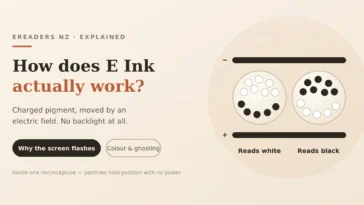
Unlike an LCD that pushes light through pixels with a backlight, an E Ink screen mimics ink on paper, creating a matte, paper-like surface. Instead of emitting light, E Ink reflects the ambient light around you, so there is no harsh glare, no flicker, and no backlight shining out at your eyes. Inside the display, a small electric field moves black and white particles to the surface to form text and images, which then stay visible without constant power. That passive design is a big part of why E Ink is comfortable to read for long stretches.
Why LCD Screens Tire the Eyes
Backlit screens emit blue light, especially noticeable in the evening. That light makes your eyes work harder and can add to eye strain and fatigue. Research also suggests that blue light close to bedtime can interfere with melatonin, the hormone that helps you sleep – which can leave your eyes feeling more tired the next day. Because the light travels straight from the screen into your eyes, backlit LCD and OLED displays tend to cause more visual fatigue than a reflective display.
How E Ink Screens Reduce Eye Strain
When you read on E Ink, your eyes respond much as they would to ink on paper. The benefits include:
- Less eye strain, with no screen flicker
- No harsh blue light or glare
- A lower chance of tired, dry eyes
- Comfort during long reading sessions
By reflecting ambient light instead of beaming it at you, an E Ink display lets your eyes relax and your brain focus on the content rather than processing artificial light.
Paper-Like Reading That Feels Natural
Because E Ink mimics ink on paper, the display does not refresh constantly or pulse light, so it does not overload your visual system. That makes E Ink devices a great fit for:
- Long reading sessions
- Studying and note-taking
- Reducing eye strain and fatigue
- Anyone sensitive to blue light
Blue Light, Sleep, and Eye Comfort
One of the biggest advantages of E Ink is far less blue light at night. Unlike a phone, tablet, or laptop, an E Ink eReader does not blast bright light into your eyes before bed, which can help protect your natural melatonin levels, support better sleep, and reduce tired eyes. It is one reason many readers switch to E Ink for evening reading.
Are E Ink Screens Better Than LCD Screens?
For reading and text-heavy tasks, yes. LCD screens are still the right tool for video and colour-rich content, but they are not ideal for hours of reading. E Ink screens are gentler on your eyes because they emit little to no blue light, reduce eye strain and fatigue, mimic ink on paper, and never shine light directly into your eyes. That is why E Ink ePaper devices are increasingly chosen by students, professionals, and readers who want a healthier alternative to conventional screens.
Final Thoughts: A Healthier Way to Read
By removing backlight glare, cutting blue light, and offering a paper-like reading experience, E Ink screens support more comfortable reading and better digital well-being. If you spend hours reading, studying, or working with text, switching to E Ink can meaningfully reduce eye strain and help your eyes feel fresher at the end of the day. You can explore the full range of BOOX E Ink eReaders at E-Readers NZ.